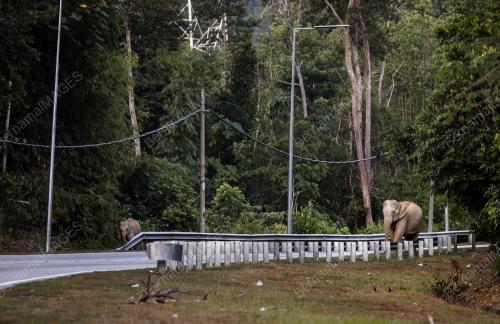
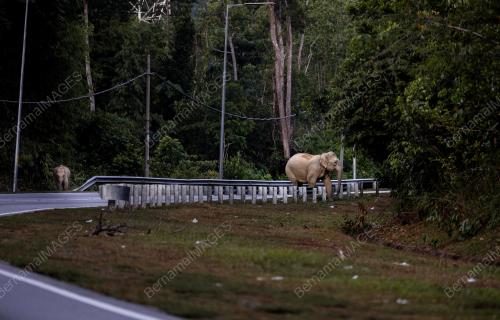
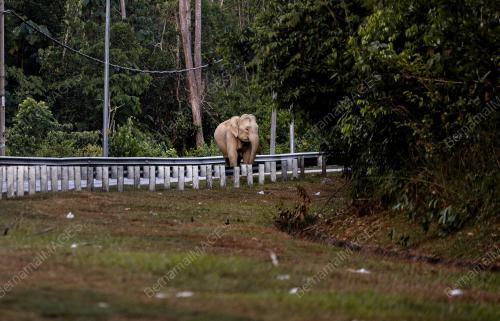
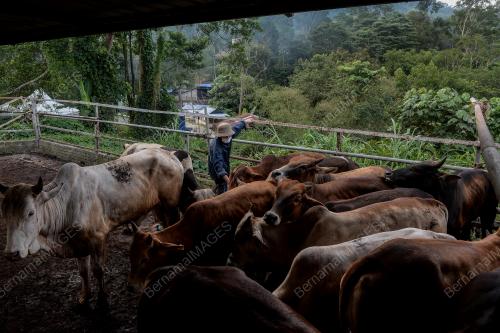
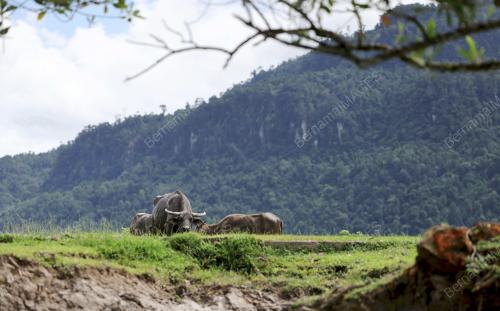
IPOH, 18 Dis - Di sebalik kehijauan hutan simpan seluas 988,412.84 hektar di Perak, ada konflik lama yang tiada kesudahan - konflik antara manusia dan gajah yang sekian lama menjadi penjaga senyap rimba, dan di Hulu Perak khususnya, pertembungan itu bukan lagi insiden terpencil tetapi bagaikan sudah menjadi rutin. Dilaporkan dari 2020 hingga 2024, sebanyak 4,919 aduan konflik gajah-manusia direkodkan di Malaysia, melibatkan kerugian RM39.4 juta dengan Perak sahaja mencatat dua kematian dan tiga kecederaan. Di sebalik angka itu, terselit kisah kehilangan - nyawa manusia yang terkorban dan nyawa gajah yang tidak pernah diberi pilihan. Di pedalaman Gerik terutamanya, kehadiran gajah di jalan raya, ladang dan halaman rumah bukan lagi sesuatu yang menghairankan. Gajah melintasi Jalan Raya Timur-Barat (JRTB), meranapkan tanaman dan menghampiri kediaman, seolah-olah mencari semula ruang yang semakin dirampas. Menurut laporan media pada Ogos 2023, seorang wanita Orang Asli maut dipijak gajah di Kemar, Gerik, manakala September tahun lepas pula seorang pekerja pembersihan kontrak maut dan seorang lagi cedera diserang haiwan itu di Mersing. Setiap kejadian meninggalkan persoalan, siapakah sebenarnya yang tersesat dari wilayah asal? Paling tidak dilupakan, peristiwa pada pagi hening 11 Mei tahun ini di JRTB Gerik-Jeli yang meruntun emosi seluruh rakyat negara ini apabila seekor ibu gajah enggan berganjak dari sisi anaknya yang mati dilanggar lori. Insiden itu seolah simbol kegagalan manusia mencari titik seimbang antara pembangunan dan kelestarian, ia bukan sekadar kemalangan jalan raya tetapi gambaran konflik yang belum berpenghujung. Tersepit antara pembangunan dan hak haiwan liar itu untuk terus menghuni habitatnya, ternyata mengurus mamalia terbesar ini bukan satu tugas mudah dan menuntut ketelitian agar tiada pihak yang tersakiti. Gajah di Malaysia dilindungi sepenuhnya di bawah Akta Pemuliharaan Hidupan Liar 2010. Melalui Jabatan Perlindungan Hidupan Liar dan Taman Negara (Perhilitan) pelbagai usaha digerakkan, termasuk operasi translokasi, pemasangan pagar elektrik di lokasi panas, rondaan dilaluan kritikal, program kesedaran awam serta mewujudkan Kawasan Perlindungan Hidupan Liar. Insiden terbaru pada 14 Dis lepas di Rancangan Penempatan Semula Air Banun, Gerik, apabila seorang lelaki Orang Asli cedera selepas ditarik gajah ke dalam gaung, sekali lagi membuktikan bahawa konflik ini belum menemui noktah. Setiap langkah gajah kini ibarat perjudian antara hidup dan mati, bukan sahaja untuk manusia tetapi juga untuk haiwan itu sendiri. Persoalannya, sejauh mana usaha pemuliharaan benar-benar mengambil kira realiti ekologi? Apabila hutan diratah sedikit demi sedikit, koridor hidupan liar terputus, dan pembangunan terus mara tanpa empati, gajah tidak mempunyai pilihan selain bergerak ke ruang manusia. Selagi empati hanya lahir seketika di skrin telefon, dan lenyap sebaik emosi reda, konflik ini akan terus berulang, dan - Sang Gergasi Rimba - kini menjadi utusan paling jelas bahawa keseimbangan sedang runtuh. Mungkin sudah tiba masanya kita berhenti sejenak, mendengar degup rimba, menilai kesan setiap keputusan, dan mengakui bahawa khazanah alam bukan warisan untuk dieksploitasi tetapi amanah untuk dipelihara. Jika tidak, suatu hari nanti - sang belalai - mungkin hanya tinggal sebagai kenangan dalam lipatan sejarah dan kita pula kehilangan sebahagian daripada jiwa alam yang pernah melindungi kita. - fotoBERNAMA (2025) HAK CIPTA TERPELIHARA
IPOH, Dec 18 - Behind the lush greenery of Perak - s permanent forest reserves spanning 988,412.84 hectares lies a long-standing, unresolved conflict - ¬ the conflict between humans and elephants. Long regarded as the silent guardians of the rainforest, these majestic animals now find themselves increasingly at odds with human expansion. In Hulu Perak in particular, such encounters are no longer isolated incidents but have become almost routine. Between 2020 and 2024, a total of 4,919 human-elephant conflict complaints were recorded nationwide, resulting in losses amounting to RM39.4 million. Perak alone reported two fatalities and three injuries. Beyond these figures lie stories of loss - ¬ human lives cut short and elephant lives taken without ever being given a choice. In the interior of Gerik especially, the sight of elephants on roads, plantations, and even near homes is no longer surprising. Elephants crossing the East - ¬œWest Highway, destroying crops, and approaching residential areas appear to be reclaiming spaces that have steadily been taken from them. According to media reports in August 2023, an Orang Asli woman was trampled to death by an elephant in Kemar, Gerik. In September last year, a contracted cleaning worker was killed and another injured in an elephant attack in Mersing. Each incident raises the same haunting question: who is truly the one that has strayed from their original territory? Most unforgettable was the heart-wrenching incident on the quiet morning of May 11 this year along the Gerik - ¬œJeli stretch of the East - ¬œWest Highway, which moved the entire nation. A mother elephant refused to leave the side of her calf after it was fatally struck by a lorry. The incident became a powerful symbol of humanity - s failure to strike a balance between development and conservation - ¬ not merely a road accident, but a stark reflection of an ongoing conflict with no end in sight. Caught between development and the right of wildlife to continue inhabiting their natural habitats, managing the country - s largest land mammal is undeniably complex and demands careful consideration so that no party is harmed. In Malaysia, elephants are fully protected under the Wildlife Conservation Act 2010. Through the Department of Wildlife and National Parks (Perhilitan), various efforts have been implemented, including translocation operations, the installation of electric fencing at conflict hotspots, patrols along critical routes, public awareness programmes, and the establishment of Wildlife Protection Areas. The latest incident on Dec 14 at the Air Banun Resettlement Scheme in Gerik, where an Orang Asli man was injured after being dragged into a ravine by an elephant, once again proves that this conflict has yet to reach its conclusion. Every step taken by an elephant now resembles a gamble between life and death - ¬ not only for humans, but for the animals themselves. The question remains: to what extent do conservation efforts truly account for ecological realities? As forests are gradually fragmented, wildlife corridors severed, and development continues to advance without empathy, elephants are left with no choice but to move into human spaces. As long as empathy exists only momentarily on phone screens and fades once emotions subside, this conflict will persist. The - Giants of the Forest - have now become the clearest messengers that balance is collapsing. Perhaps it is time we pause, listen to the heartbeat of the forest, reflect on the consequences of every decision, and acknowledge that natural heritage is not a legacy to be exploited, but a trust to be protected. Otherwise, one day, the mighty tusked giants may exist only as memories in the pages of history - ¬ and we will have lost a part of nature - s soul that once sheltered us. - fotoBERNAMA (2025) COPYRIGHT RESERVED
- All
-
- 1980 (0)
- 1981 (0)
- 1982 (0)
- 1983 (0)
- 1984 (0)
- 1985 (0)
- 1987 (0)
- 1989 (0)
- 1990 (0)
- 1993 (0)
- 1994 (0)
- 1995 (0)
- 1996 (0)
- 1998 (0)
- 2000 (0)
- 2001 (0)
- 2002 (0)
- 2003 (0)
- 2004 (0)
- 2005 (0)
- 2006 (0)
- 2007 (0)
- 2008 (0)
- 2009 (0)
- 2010 (0)
- 2011 (0)
- 2012 (0)
- 2013 (0)
- 2014 (0)
- 2015 (0)
- 2016 (0)
- 2017 (0)
- 2018 (0)
- 2019 (0)
- 2020 (0)
- 2021 (0)
- 2022 (0)
- 2023 (0)
- 2024 (0)
- 2025 (0)
- 2026 (0)
-
- MAS-CHINA 1985-1999 (38)
- MAS-CHN APRIL 2011 (22)
- MAS-CHN DISEMBER 2005 (11)
- MAS-CHN JUN 2009 (15)
- MAS-CHN JUN 2014 (40)
- MAS-CHN MAC 2023 (34)
- MAS-CHN MARCH 2015 (11)
- MAS-CHN MAY 2004 (15)
- MAS-CHN MAY 2017 (27)
- MAS-CHN NOV 2009 (11)
- MAS-CHN NOV 2015 (27)
- MAS-CHN NOV 2023 (7)
- MAS-CHN OCTOBER 2006 (20)
- MAS-CHN OGOS 2018 (39)
- MAS-CHN OKTOBER 2001 (3)
- MAS-CHN SEPTEMBER 2023 (6)
-
- DATUK MOHD KHAIRUL ADIB (11)
- MASJID ALAEDDIN, JUGRA (15)
- MASJID AL FALAH, SUBANG JAYA (62)
- MASJID AL HASANAH, BANGI (303)
- MASJID AL MUKARRAMAH, BANDAR SRI DAMANSARA (21)
- MASJID AL TUQO, TANJUNG KARANG (21)
- MASJID AS SALAM, PUCHONG (142)
- MASJID CINA MUSLIM, KLANG (187)
- MASJID DARUL EHSAN, AMPANG JAYA (23)
- MASJID DENAI ALAM (113)
- MASJID DIRAJA KLANG (168)
- MASJID DIRAJA SULTAN SULEIMAN, KLANG (174)
- MASJID DIRAJA TENGKU AMPUAN JEMAAH, BUKIT JELUTONG (22)
- MASJID INDIA MUSLIM, KLANG (195)
- MASJID KOTA RAJA, KLANG (102)
- MASJID LAMA PANCHANG BEDENA, SUNGAI BESAR (474)
- MASJID PUNCAK ALAM (5)
- MASJID RAJA FI SABILILLAH, CYBERJAYA (135)
- MASJID RAJA LUMU, KUALA SELANGOR (16)
- MASJID SHEIKH ISMAIL, HULU BERNAM (11)
- MASJID SULTAN ABD AZIZ, PULAU INDAH (12)
- MASJID SULTAN ABDUL SAMAD, KLIA (13)
- MASJID SULTAN IBRAHIM, KUALA SELANGOR (8)
- MASJID SULTAN SALAHUDDIN ABDUL AZIZ SHAH, SHAH ALAM (217)
- MASJID WARISAN AL HIDAYAH, AMPANG PECAH (25)
- MASJID WARISAN AMPANG PECAH, KUALA KUBU BHARU (24)
-
- ACTIONS (0)
- ANIMALS AND PETS (1)
- ARCHITECTURE AND BUILDINGS (259)
- ARTS AND ENTERTAINMENT (0)
- BEAUTY AND HEALTH (0)
- BUSINESS (19)
- FOOD AND DRINK (12)
- HOLIDAYS AND CELEBRATIONS (0)
- INDUSTRY (4)
- LANDSCAPE (79)
- LIFESTYLE (2)
- MEDICINE AND SCIENCE (0)
- NATURE (18)
- OBJECTS/EQUIPMENT (0)
- PEOPLE (0)
- SPORTS AND FITNESS (0)
- TECHNOLOGY (0)
- TRANSPORTATION (7)
- TRAVEL LOCATIONS (6)
-
- TUN DR WAN JUNAIDI 2010 (19)
- TUN DR WAN JUNAIDI 2011 (16)
- TUN DR WAN JUNAIDI 2012 (27)
- TUN DR WAN JUNAIDI 2013 (96)
- TUN DR WAN JUNAIDI 2014 (71)
- TUN DR WAN JUNAIDI 2015 (120)
- TUN WAN JUNAIDI 2016 (185)
- TUN WAN JUNAIDI 2017 (191)
- TUN WAN JUNAIDI 2018 (48)
- TUN WAN JUNAIDI 2019 (2)
- TUN WAN JUNAIDI 2020 (78)
- TUN WAN JUNAIDI 2021 (95)
- TUN WAN JUNAIDI 2022 (99)
- TUN WAN JUNAIDI 2023 (54)
- TUN WAN JUNAIDI 2024 (165)
- TUN WAN JUNAIDI 2025 (113)
-
- TYT - AHLI PARLIMEN BATANG LUPAR (1)
- TYT - AHLI PARLIMEN SANTUBONG (28)
- TYT - MENTERI DI JABATAN PM (67)
- TYT - MENTERI PEMBANGUNAN USAHAWAN & KOPERASI (51)
- TYT - MENTERI SUMBER ASLI & ALAM SEKITAR (66)
- TYT - PENGARAH OPERASI PRK (1)
- TYT - TIMBALAN MENTERI DALAM NEGERI (7)
- TYT - TIMBALAN YANG DI-PERTUA DEWAN RAKYAT (58)
- TYT - TOKOH MAAL HIJRAH (0)
- TYT - YANG DI-PERTUA DEWAN NEGARA KE-19 (10)
- TYT - YANG DI-PERTUA DEWAN RAKYAT (2)
Search by Image
Drag & Drop Image Here
or click to browse files
Search Options
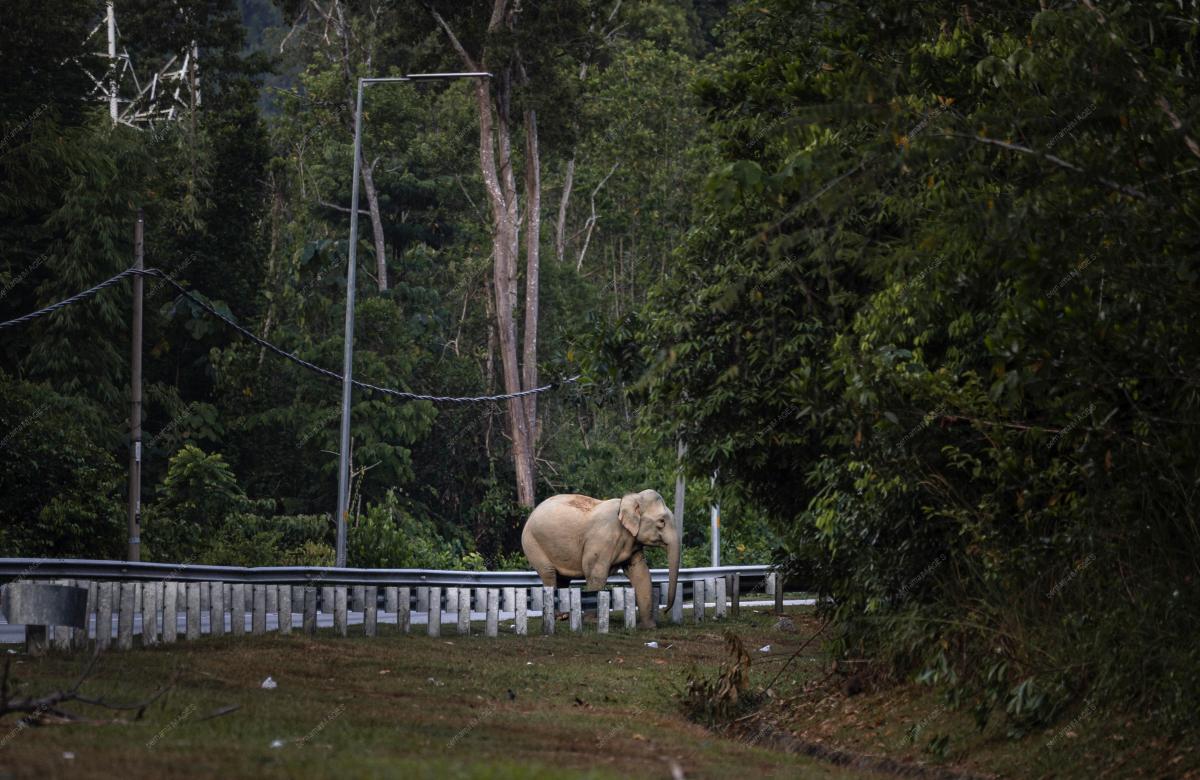
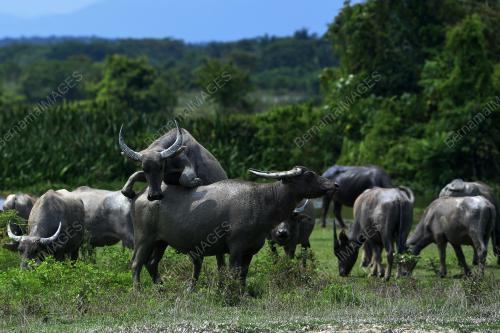
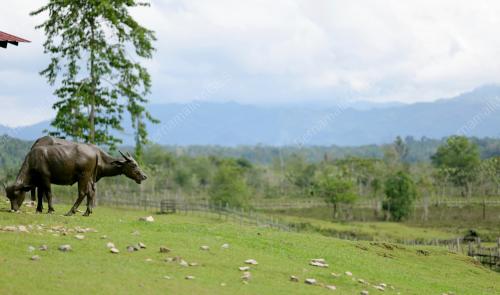
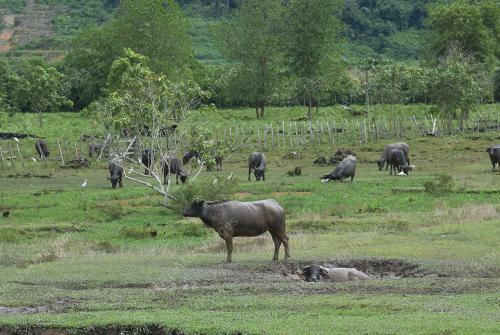
GAJAH DAN MANUSIA: KONFLIK YANG BELUM SELESAI
photographed by: ZULFADHLI ZULKARNAIN
This image is licensed under a Rights Managed (RM) license. Use of this image is limited to the specific terms agreed upon, including usage in [specified medium], for a duration of [specified period], within [geographical location], and for [specified purpose]. Any use beyond these terms requires additional permission and may incur additional fees. Unauthorized use is prohibited.

License Terms
BERNAMA DIGITAL IMAGES LICENSING TERMS & CONDITIONS
These Terms & Conditions govern the purchase and use of photographs ("PHOTO(S)") made available by Pertubuhan Berita Nasional Malaysia (BERNAMA) through its online platform.
By purchasing, downloading, accessing, or using any PHOTO(S), the purchaser ("Licensee") agrees to be bound by these Terms & Conditions.
1. GRANT OF LICENSE
BERNAMA grants the Licensee a non-exclusive, non-transferable, and limited license to use the PHOTO(S) strictly in accordance with the usage, duration, territory, and purpose specified at the time of purchase.
The Licensee shall not use the PHOTO(S) for any purpose other than those expressly permitted without the prior written consent of BERNAMA.
BERNAMA reserves the right to refuse, restrict, or cancel any license request at its sole discretion.
2. COPYRIGHT AND OWNERSHIP
All copyrights, intellectual property rights, title, and ownership of the PHOTO(S) shall remain vested in BERNAMA and/or its respective content providers.
The purchase of a license does not transfer ownership of the PHOTO(S) to the Licensee.
All rights not expressly granted herein are reserved by BERNAMA.
3. LICENSE FEE AND PAYMENT
The Licensee agrees to pay the applicable licensing fee as displayed on the online platform at the time of purchase.
All fees shall be payable in Malaysian Ringgit (RM) unless otherwise stated.
BERNAMA reserves the right to revise licensing fees at any time without prior notice.
4. DELIVERY OF PHOTO(S)
Upon successful payment verification, the PHOTO(S) shall be delivered electronically through download access, email transmission, or other methods determined by BERNAMA.
BERNAMA shall not be responsible for delays arising from technical issues beyond its reasonable control.
5. PHOTO CREDIT
Unless otherwise specified by BERNAMA, the Licensee shall provide proper attribution when publishing or reproducing the PHOTO(S).
The recommended credit line shall be: BERNAMApix, BERNAMAPhoto, BERNAMA Images.
BERNAMA may waive or modify this requirement for specific licensing arrangements.
6. RESTRICTIONS ON USE
The Licensee shall not:
a) resell, sublicense, redistribute, transfer, assign, rent, lease, or otherwise make the PHOTO(S) available to any third party;
b) use the PHOTO(S) in any unlawful, defamatory, misleading, obscene, offensive, or unethical manner;
c) alter, manipulate, distort, or create derivative works from the PHOTO(S) without prior written consent from BERNAMA, except for reasonable cropping, resizing, colour correction, or formatting required for the approved use;
d) remove, obscure, or modify any copyright notice, watermark, metadata, or attribution associated with the PHOTO(S);
e) claim ownership, authorship, or exclusive rights over the PHOTO(S).
7. INDEMNITY
The Licensee shall indemnify, defend, and hold harmless BERNAMA, its officers, employees, agents, and representatives from and against any claims, liabilities, damages, losses, costs, or expenses (including reasonable legal fees) arising out of:
a) the Licensee's use of the PHOTO(S);
b) any breach of these Terms & Conditions; or
c) any infringement of the rights of third parties resulting from the Licensee's use of the PHOTO(S).
8. LIMITATION OF LIABILITY
To the fullest extent permitted by law, BERNAMA shall not be liable for any indirect, incidental, consequential, special, punitive, or exemplary damages arising from the use of the PHOTO(S).
BERNAMA's total liability under these Terms & Conditions shall not exceed the amount paid by the Licensee for the relevant PHOTO(S).
9. REFUND POLICY
Due to the digital nature of the PHOTO(S), all purchases are final.
No refunds, exchanges, or cancellations shall be provided once the PHOTO(S) have been delivered, downloaded, accessed, or made available to the Licensee, except where required by applicable law.
10. TERMINATION
BERNAMA may immediately suspend or terminate the License granted under these Terms & Conditions if the Licensee breaches any provision herein.
Upon termination, the Licensee shall immediately cease all use of the PHOTO(S) and remove or destroy all copies within its possession, custody, or control.
Termination shall not affect any accrued rights or obligations of either party.
11. GOVERNING LAW AND JURISDICTION
These Terms & Conditions shall be governed by and construed in accordance with the laws of Malaysia.
Any dispute arising out of or in connection with these Terms & Conditions shall be subject to the exclusive jurisdiction of the courts of Malaysia.
12. ACCEPTANCE OF TERMS
By completing payment, downloading, accessing, or using the PHOTO(S), the Licensee acknowledges that it has read, understood, and agreed to be bound by these Terms & Conditions.
Such action shall constitute a legally binding agreement between BERNAMA and the Licensee.
13. ENTIRE AGREEMENT
These Terms & Conditions constitute the entire agreement between BERNAMA and the Licensee concerning the licensing and use of the PHOTO(S).
Any waiver, amendment, or modification shall only be effective if made in writing by BERNAMA.




Forgot Password
Don't worry! Just enter your email address below, and we'll send you a link to reset your password.